

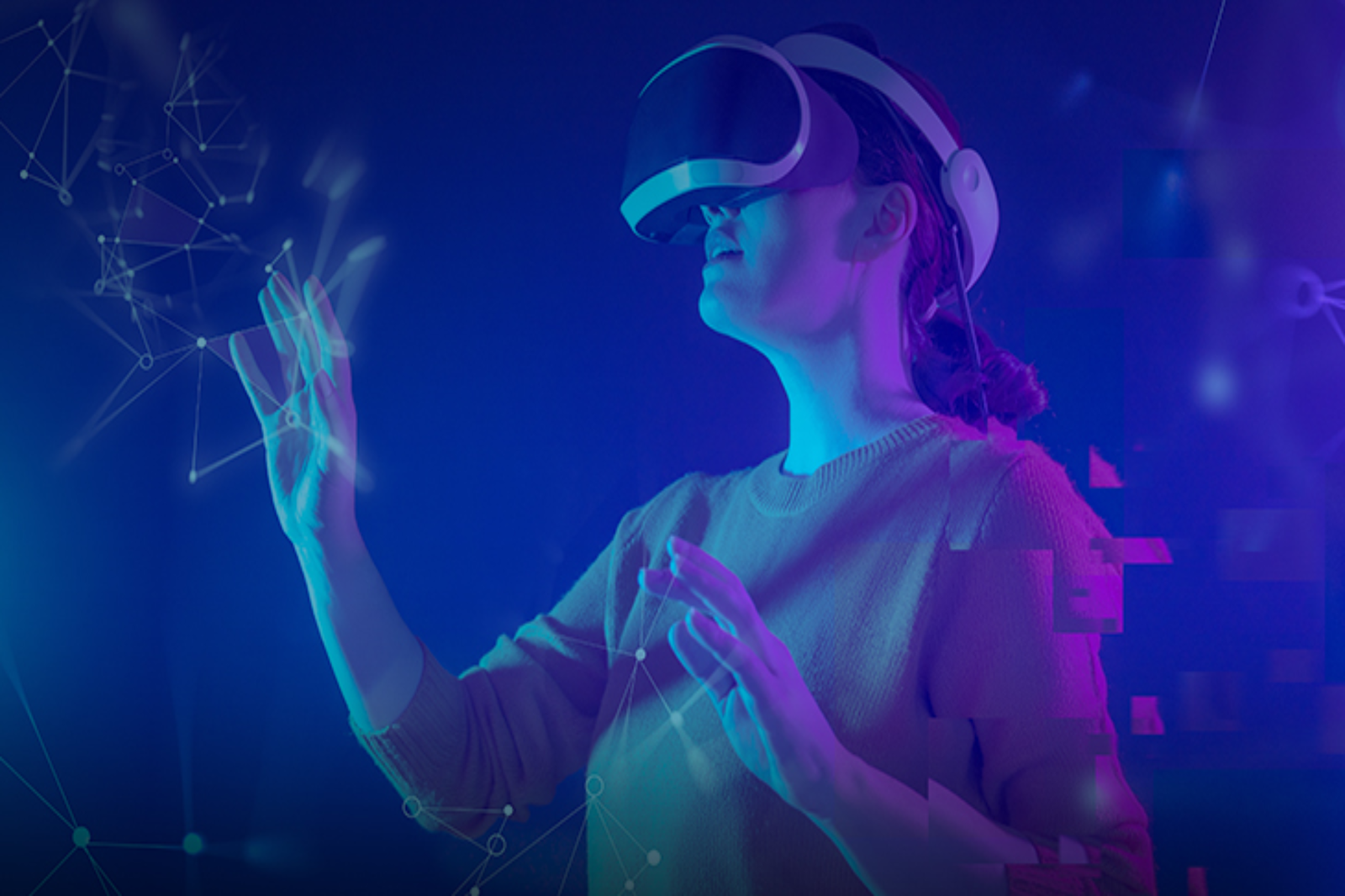
In late 2021, the tech world seemed to collectively hold its breath. Facebook rebranded to "Meta," billions of dollars poured into virtual land sales, and the term "Metaverse" became the buzzword of the decade. Fast forward a few years, and the deafening hype has quieted. However, dismissing the Metaverse as a passing fad would be a mistake.
Beneath the surface of fluctuating crypto markets and clunky VR avatars, a profound shift in human-computer interaction is occurring. We are moving from viewing the internet on 2D screens to inhabiting it within 3D spaces.
This article explores the Metaverse not as a single product, but as a convergence of technologies that promises to redefine how we work, play, and exist digitally.
1. Defining the Indefinable: What is the Metaverse?
The term was coined by author Neal Stephenson in his 1992 sci-fi novel Snow Crash, describing a virtual reality-based successor to the internet. Today, definitions vary, but the most accurate way to understand the Metaverse is as the Spatial Web.
It is a network of 3D virtual worlds focused on social connection. Unlike a video game, which has a start, an end, and a specific objective, the Metaverse is:
- Persistent: It never "pauses" or "resets." It continues indefinitely, just like the real world.
- Live and Synchronous: Events happen in real-time for everyone.
- Interoperable: Ideally, it allows data, digital assets (like avatars or currency), and content to be carried across different platforms (though this is currently its biggest hurdle).
Think of the current internet as a digital library you browse. The Metaverse is a digital city you inhabit.
2. The Technological Pillars
The Metaverse is not a single technology; it is a combination of several cutting-edge innovations maturing at the same time.
A. XR (Extended Reality)
This is the umbrella term for the interface of the Metaverse:
- Virtual Reality (VR): Fully immersive digital environments (e.g., Meta Quest, Apple Vision Pro). You are "inside" the computer.
- Augmented Reality (AR): Digital overlays on the real world (e.g., Pokémon GO, Microsoft HoloLens). This is likely to be more dominant than VR in daily life because it doesn't remove you from your physical surroundings.
B. Blockchain and Web3
In the physical world, if you buy a shirt, you own it. In the digital world (Web2), if you buy a skin in Fortnite, you only "lease" it within that game. If the game shuts down, your asset vanishes.
Blockchain technology introduces Digital Scarcity and True Ownership via NFTs (Non-Fungible Tokens). This allows for a decentralized economic system where users, not corporations, own their digital goods, identity, and data.
C. Connectivity and Compute
Rendering photorealistic 3D worlds in real-time requires immense processing power.
- 5G & 6G: Low latency is crucial. A lag of even 20 milliseconds in VR can cause motion sickness.
- Edge Computing: Processing data closer to the user (rather than in a distant data center) to ensure instant feedback.
3. The Architecture of Presence
The "killer app" of the Metaverse is not gaming; it is Presence.
Video calls (Zoom, Teams) have kept the world running, but they are mentally exhausting. This is known as "Zoom Fatigue." It happens because our brains are processing non-verbal cues from a grid of faces staring directly at us, which is unnatural.
In a 3D spatial environment, audio is spatialized (you hear voices from the direction of the avatar), and body language is simulated. Being in a virtual room with a colleague feels psychologically distinct from looking at them on a video feed. It triggers the brain's spatial memory—you remember "meeting" them, not just "seeing" them.
4. Use Cases: Beyond Gaming
While gaming is the entry point, the mature Metaverse offers utility across various sectors.
The Industrial Metaverse (Digital Twins)
This is currently the most valuable sector. Companies like BMW and Siemens use NVIDIA’s Omniverse to build "Digital Twins" of their factories. These are physics-accurate replicas of real-world facilities.
- Scenario: Before building a physical robot arm, engineers simulate it in the Metaverse. They run millions of cycles to test for errors. Only when the digital twin is perfect do they build the physical version. This saves billions in manufacturing costs.
Education and Training
Imagine medical students practicing complex surgeries in VR with haptic gloves that simulate the resistance of tissue, rather than reading about it in a textbook. Imagine history students walking through a reconstructed Ancient Rome rather than looking at pictures. The Metaverse turns passive learning into active experience.
Virtual Real Estate and Commerce
Brands like Gucci and Nike are already building persistent spaces in platforms like Roblox and The Sandbox. It’s a new marketing channel where "Direct to Avatar" (D2A) sales could eventually rival "Direct to Consumer" (DTC) physical sales.
5. The Great Wall: The Interoperability Challenge
Currently, we do not have The Metaverse; we have many "metaverses" (plural).
We have Roblox, Fortnite, Decentraland, and Horizon Worlds. They are Walled Gardens. You cannot take your World of Warcraft character into a Zoom meeting. You cannot wear your Roblox skin in Fortnite.
For the Metaverse to become the next iteration of the internet, it requires open standards (like HTML and email protocols). Organizations like the Metaverse Standards Forum are working on this, creating universal file formats (like USD - Universal Scene Description) to allow 3D assets to move freely between worlds. Without interoperability, the Metaverse is just a collection of disconnected video games.
6. The Dark Side: Ethics, Privacy, and Safety
The transition to the Metaverse brings terrifying risks that must be addressed.
Hyper-Surveillance
On the web, companies track where you click. In the Metaverse, they can track where you look (eye-tracking), your gait, your hand movements, and your physiological reactions. The amount of biometric data harvested could effectively predict your thoughts and emotions before you are even aware of them.
Identity and Harassment
Harassment in VR feels much more traumatic than text harassment because of the sense of presence. Being "touched" inappropriately by an invisible stranger in a VR chatroom triggers a genuine "fight or flight" response. Moderating 3D spaces in real-time is infinitely harder than moderating text forums.
The Reality Gap
If the virtual world becomes more beautiful, exciting, and rewarding than the physical world, will we neglect our physical reality? This is the dystopian warning of Ready Player One.
7. Conclusion: The Long Road Ahead
Is the Metaverse dead? No. It is simply in the "Trough of Disillusionment" on the Gartner Hype Cycle. The initial speculative bubble has burst, and now the real work of building the infrastructure begins.
We are in the "dial-up" era of the Metaverse. The headsets are heavy, the graphics are often cartoonish, and the use cases are niche. But looking back at the 1990s internet, no one could have predicted Uber, Instagram, or streaming 4K video.
The Metaverse represents the inevitable shift of human culture into the digital realm. It merges the information richness of the internet with the spatial nature of the physical world. It will not happen overnight, and it will likely look very different from the sci-fi movies. But make no mistake: the screen you are looking at right now is slowly dissolving. We are stepping through the glass.
Comments (0)