

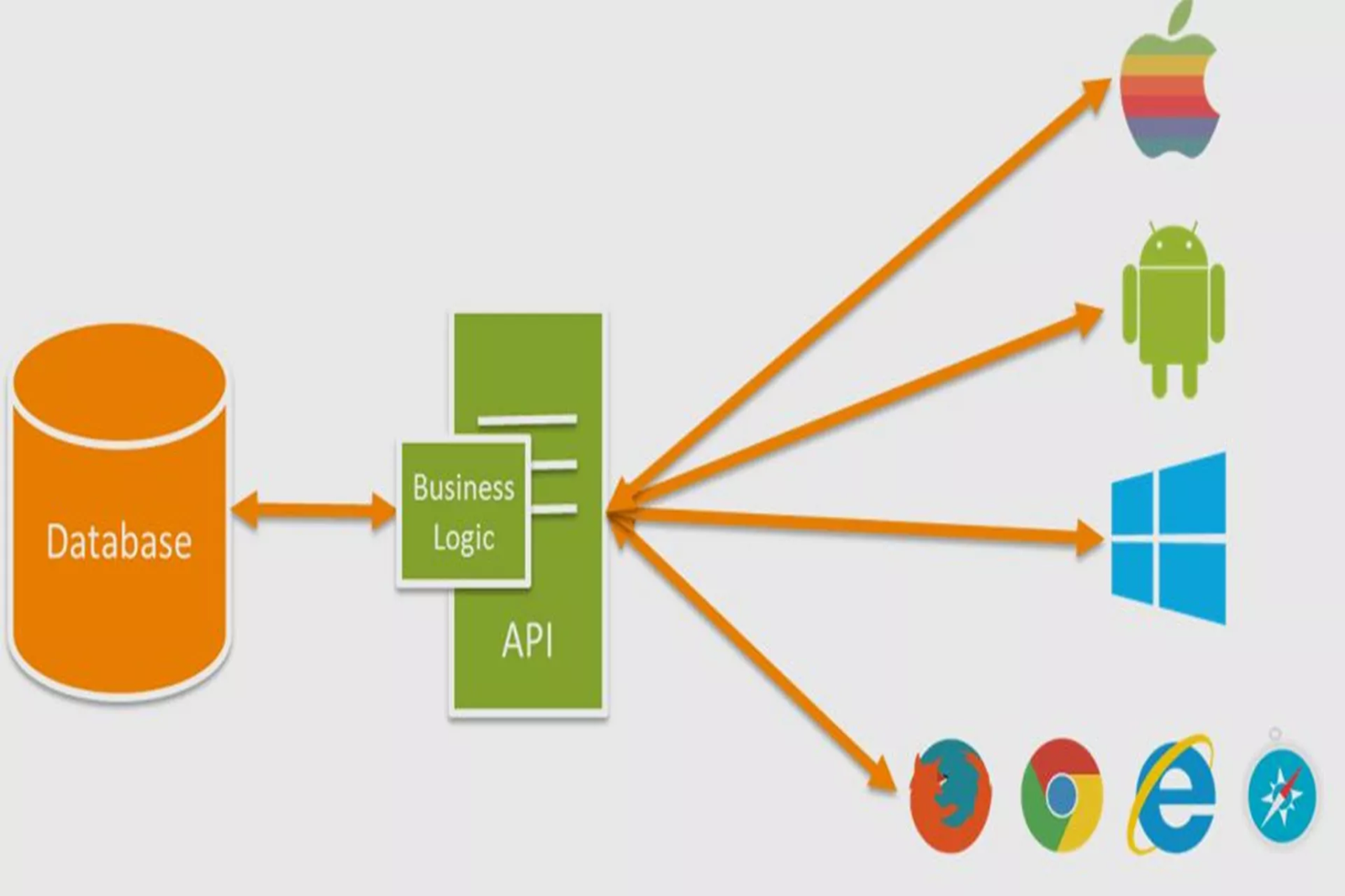
In the vast, sprawling ecosystem of the modern digital world, there is a silent workhorse. It is the reason you can book a flight on a travel aggregator, pay for a coffee with your phone, or log into a new app using your Google account. It is the API, or Application Programming Interface.
While often discussed in the context of software engineering, APIs are more than just lines of code; they are the connective tissue of the global economy. This article delves deep into what APIs are, how they function architecturally, the different protocols that govern them, and why they are the most critical component of modern digital transformation.
1. What is an API? The Conceptual Foundation
At its core, an API is a set of rules and protocols that allows different software applications to communicate with each other. It defines the methods and data formats that applications can use to request and exchange information.
To understand this without getting bogged down in syntax, let’s use the most famous analogy in the tech world: The Restaurant.
Imagine you are sitting at a table in a restaurant. You (the Client) have a menu of options. In the back, there is a kitchen (the Server/Database) where the food is prepared. However, you cannot simply walk into the kitchen and start cooking or shouting orders at the chefs. You need a messenger.
That messenger is the waiter (the API).
- You look at the menu (the Documentation) to see what is available.
- You tell the waiter what you want (the Request).
- The waiter takes your order to the kitchen.
- The kitchen prepares the food.
- The waiter brings the finished dish back to your table (the Response).
In this scenario, you don’t need to know how the stove works or where the ingredients are stored. You just need to know how to ask the waiter. Similarly, a developer doesn't need to know the internal logic of Google Maps to put a map on their website; they just need to know how to ask the Google Maps API.
2. How APIs Work: The Technical Mechanics
While the analogy is helpful, the technical reality relies on a structured cycle of Requests and Responses. This communication usually happens over the internet using HTTP (Hypertext Transfer Protocol).
The Request
When a client (like a mobile app) wants data, it sends a request to an API endpoint. An Endpoint is a specific URL where the API listens for requests. A request typically consists of:
- The URL: The address (e.g., api.weather.com/v1/forecast).
- The Method: The type of action desired (GET, POST, PUT, DELETE).
- Headers: Meta-information (authentication tokens, content type).
- Body: Data being sent to the server (used when creating or updating data).
The Response
The server processes the request and sends back a response. This includes:
- Status Code: A three-digit number indicating success or failure (e.g., 200 OK means success, 404 Not Found means the resource is missing, 500 Internal Server Error means the API crashed).
- Body: The actual data requested.
Data Formats: JSON and XML
In the early days of the web, XML (Extensible Markup Language) was the standard for data exchange. It was thorough but verbose and heavy.
Today, JSON (JavaScript Object Notation) is the undisputed king of modern APIs. JSON is lightweight, human-readable, and easy for machines to parse.
Example of a JSON Response:
JSON
{ "user_id": 101, "name": "John Doe", "active": true, "roles": ["admin", "editor"] }
3. API Architectures and Protocols
Not all APIs are built the same way. Over the decades, different architectural styles have emerged to solve specific problems.
SOAP (Simple Object Access Protocol)
SOAP is the "old guard." It is a protocol, not just a style, meaning it has strict rules. It relies exclusively on XML and offers high security and transaction compliance. Because of this, SOAP is still widely used in financial services, banking, and telecommunications where rigid standards are necessary. However, it is heavy and difficult to implement for simple tasks.
REST (Representational State Transfer)
REST is the dominant architecture of the web today. A "RESTful" API is designed around Resources. If SOAP is like sending a formal letter, REST is like browsing a webpage.
- Stateless: The server does not remember the client between requests. Each request contains all the necessary information.
- Cacheable: Responses can be stored to improve speed.
- Uniform Interface: It uses standard HTTP verbs (GET to read, POST to write, DELETE to remove).
GraphQL
Developed by Facebook, GraphQL is the modern challenger to REST. In a standard REST API, you might get back more data than you need (over-fetching) or have to make multiple requests to get different pieces of data (under-fetching).
GraphQL allows the client to ask for exactly what it wants. Instead of multiple endpoints, there is usually a single endpoint, and the client sends a query defining the structure of the data they need.
gRPC (Google Remote Procedure Call)
gRPC is a high-performance framework that uses HTTP/2. It is incredibly fast and is often used for communication between microservices (internal servers talking to each other) rather than public-facing APIs.
4. Types of APIs by Access
Understanding who can access an API is just as important as how it is built.
- Public (Open) APIs: These are available to external developers. Examples include the OpenAI API, Twitter API, or Google Maps API. They are often used to encourage innovation and extend the platform's reach.
- Partner APIs: These are shared only with specific business partners. For example, a specific logistics company might have a Partner API with Amazon to update shipping statuses.
- Internal (Private) APIs: These are hidden from the public and used only within an organization. A company's mobile app might talk to its backend server using a private API.
- Composite APIs: These combine multiple data or service APIs. They allow developers to access several endpoints in a single call, which is useful for complex tasks.
5. The API Economy: Business Value
APIs have shifted from being a technical necessity to a business product. This shift is often referred to as the API Economy.
In the past, software was sold as a monolith (a CD-ROM in a box). Today, companies sell "functions" as a service.
- Stripe: They don't sell banking software; they provide an API that handles payments. Seven lines of code allow any website to accept credit cards.
- Twilio: They provide an API for SMS and voice calls. Uber uses Twilio to mask phone numbers between drivers and riders.
- SendGrid: An API strictly for sending emails.
These companies are valued in the billions, yet their primary "product" is invisible code that other developers integrate. This modularity allows startups to build complex products rapidly by "gluing" together best-in-class APIs for payments, maps, email, and authentication.
6. Security: Protecting the Gateway
Because APIs are gateways to a server's data, they are prime targets for hackers. If an API is insecure, it can lead to massive data breaches.
Authentication and Authorization
How does the API know who you are?
- API Keys: A unique string of characters acting as a password. The client sends this key in the header. It tracks usage but isn't very secure for user data.
- OAuth 2.0: The industry standard for authorization. This is the magic behind "Log in with Google." It allows a user to grant a third-party application access to their data without sharing their actual password.
Rate Limiting
To prevent abuse (or DDoS attacks), APIs implement rate limiting. This restricts the number of requests a user can make in a specific timeframe (e.g., 100 requests per minute). If you exceed this, you receive a 429 Too Many Requests error.
7. The Future of APIs: AI and Beyond
The landscape of APIs is evolving rapidly with the rise of Artificial Intelligence.
AI-Driven APIs
We are entering an era where APIs are not just consumed by human developers, but by AI Agents. Large Language Models (LLMs) like Gemini or GPT-4 are being trained to read API documentation and execute tasks. Imagine telling an AI: "Book me a flight to London for under $600 next Tuesday." In the background, the AI Agent will:
- Read the Skyscanner API documentation.
- Authenticate itself.
- Send the GET requests for flights.
- Filter the JSON response.
- Execute a POST request to book the ticket.
This "Agentic Web" relies entirely on well-structured, machine-readable APIs.
Conclusion
APIs are the unsung heroes of the digital age. They are the standardized plugs and sockets of the internet, allowing a chaotic mix of devices, servers, and operating systems to work in harmony.
From the strict protocols of SOAP in banking to the flexibility of GraphQL in social media, and the ubiquity of REST in web services, APIs enable the connectivity that defines our modern lives. As we move toward an AI-first world, the importance of robust, secure, and efficient APIs will only grow. They are not just tools for developers; they are the infrastructure of the future.
Comments (0)