

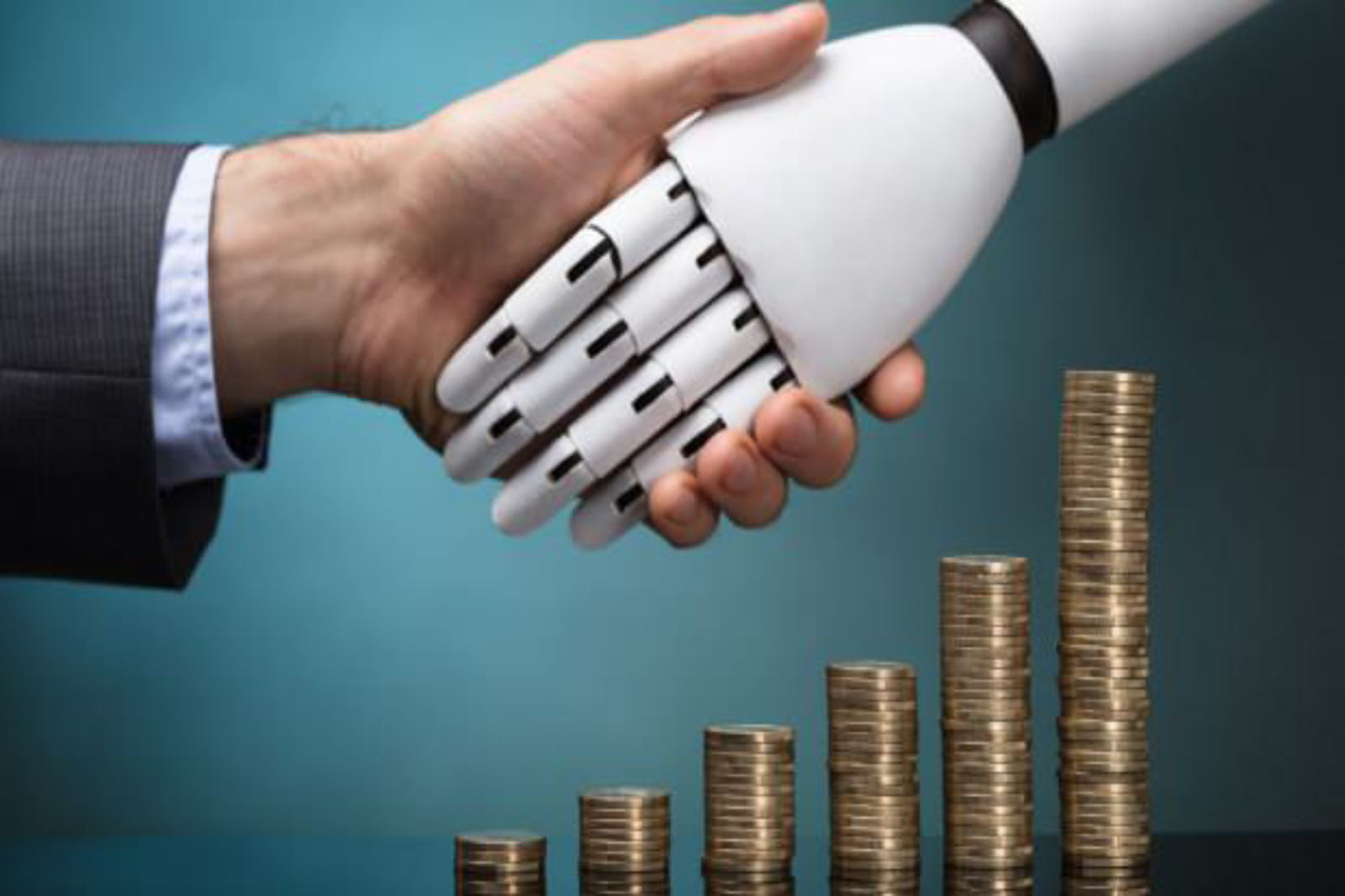
The global economy stands at the precipice of a transformation comparable in scale and significance to the Industrial Revolution of the 19th century or the electrification of the 20th century. At the center of this seismic shift is Artificial Intelligence (AI). Once the domain of science fiction and academic theory, AI has rapidly matured into a general-purpose technology that is reshaping the fundamental mechanics of production, consumption, and wealth distribution. From predictive algorithms optimizing global supply chains to Large Language Models (LLMs) writing software code, the economic footprint of AI is deepening. This essay explores the multifaceted economic impacts of AI, analyzing its potential to drive unprecedented productivity growth while simultaneously presenting profound challenges regarding labor displacement, inequality, and market regulation.
1. The Engine of Productivity and GDP Growth
The primary economic argument for the rapid adoption of AI is its potential to significantly boost productivity. In economic theory, long-term growth is driven not just by adding more capital or labor, but by "Total Factor Productivity" (TFP)—essentially, how efficiently inputs are converted into outputs. AI serves as a powerful lever for TFP.
According to research by major financial institutions like Goldman Sachs, generative AI alone could raise global GDP by 7% (almost $7 trillion) over a ten-year period. This growth stems from AI’s ability to process vast amounts of data far beyond human capability. In sectors like healthcare, AI accelerates drug discovery, reducing the years-long R&D cycle to mere months, thereby saving billions of dollars. In the energy sector, machine learning algorithms optimize power grid distribution in real-time, reducing waste and lowering costs for industrial manufacturing.
Furthermore, AI acts as a capital-labor hybrid. Unlike traditional software, which is a tool used by a human, modern AI agents can perform autonomous tasks. This allows businesses to scale operations without a linear increase in headcount. For instance, customer service chatbots can handle thousands of inquiries simultaneously, or automated legal review systems can scan millions of documents in minutes. This "doing more with less" dynamic is the bedrock of the optimistic view regarding AI’s economic contribution, promising a future of abundance and reduced costs for goods and services.
2. The Labor Market: Displacement vs. Augmentation
While the productivity narrative is positive, the impact on the labor market creates a dichotomy of fear and hope. The central debate among economists is whether AI will primarily be a substitute for human labor or a complement to it.
Historically, technological advances have displaced specific tasks but created new roles—a phenomenon known as "creative destruction." However, AI differs from previous technologies because it automates cognitive tasks rather than just physical ones. This places "white-collar" jobs in the crosshairs for the first time. Professions previously thought to be safe from automation—such as graphic design, translation, entry-level coding, and financial analysis—are now facing significant disruption.
The Substitution Effect: In the short term, displacement is inevitable. Administrative support, data entry, and routine analysis roles are shrinking. Companies looking to maximize shareholder value may choose to replace human teams with AI systems to cut overhead costs, leading to frictional unemployment. This transition period could be painful, requiring robust social safety nets and retraining programs.
The Augmentation Effect: Conversely, many economists argue that AI will serve as a "copilot," augmenting human capabilities rather than replacing them. For a software engineer, AI does not necessarily remove the need for the human; rather, it handles the repetitive syntax writing, allowing the engineer to focus on complex system architecture. This increases the value of the human worker. Furthermore, as AI lowers the barrier to entry for complex tasks, it may democratize expertise. For example, a medical nurse practitioner equipped with AI diagnostic tools might be able to perform assessments that previously required a specialized doctor, increasing the supply of healthcare services.
Ultimately, the net impact on jobs will depend on the speed of adoption and the adaptability of the workforce. While new job categories will undoubtedly emerge (e.g., AI ethics compliance officers, prompt engineers, robot maintenance), the transition gap remains a significant economic risk.
3. Industry-Specific Transformations
To understand the aggregate economic impact, one must look at how AI reshapes specific verticals:
- Finance and Banking: The financial sector was an early adopter of algorithmic trading. Today, AI is used for credit risk assessment, fraud detection, and personalized banking. By analyzing non-traditional data points, AI can extend credit to underbanked populations, potentially stimulating economic activity in neglected demographics. However, it also introduces systemic risks; algorithmic bias could unfairly deny loans, and high-frequency AI trading could trigger market flash crashes.
- Manufacturing and Logistics (Industry 4.0): The integration of AI with the Internet of Things (IoT) has led to "smart factories." Predictive maintenance uses sensors to detect when a machine needs repair before it breaks down, drastically reducing downtime. In logistics, AI optimizes shipping routes to save fuel and time. This efficiency is deflationary, helping to keep consumer prices low even during periods of high demand.
- Creative and Media Economies: Generative AI has disrupted the economics of content creation. The marginal cost of producing text, images, and code is approaching zero. While this allows for an explosion of content, it threatens the livelihoods of artists and writers, raising complex questions about intellectual property rights and the economic value of human creativity.
4. Inequality and the "Winner-Takes-All" Dynamic
Perhaps the most concerning economic consequence of the AI revolution is the potential for exacerbating inequality, both within nations and between them.
Domestic Inequality: The digital economy often functions on a "winner-takes-all" basis. A small number of tech giants who control the underlying AI models (the "foundation models") and the massive data centers required to run them stand to accrue a disproportionate share of the wealth. Meanwhile, labor's share of national income may continue to decline if capital (in the form of AI software and robots) becomes more valuable than human labor. If high-skilled workers become hyper-productive using AI while low-skilled workers are displaced, the wage gap will widen significantly.
Global Inequality: On an international scale, the "AI divide" could leave developing nations behind. Developing economies have historically grown by relying on cheap manufacturing labor to export goods to rich countries. If Western nations can use AI and robotics to manufacture goods domestically at a cost lower than outsourcing, the traditional development ladder for emerging economies is broken. Countries without the infrastructure to support AI ecosystems risk becoming mere data colonies—exporting raw data and importing expensive AI services—rather than economic partners.
5. The Challenge of Regulation and Policy
The invisible hand of the market alone cannot solve the externalities created by AI. Governments face the difficult task of regulating the technology without stifling innovation.
Economic policy must evolve. We are seeing renewed discussions around Universal Basic Income (UBI) or Universal Basic Services. If AI leads to a scenario of "jobless growth"—where GDP rises but employment falls—mechanisms must be established to redistribute the wealth generated by automated systems.
Furthermore, antitrust regulation is becoming critical. Data is the oil of the AI economy. If a few corporations monopolize the data sets required to train competitive AI, market competition will stifle. Governments are beginning to view data access and compute power as critical infrastructure, similar to electricity or water, which requires public oversight.
6. Conclusion
In conclusion, the economic impact of Artificial Intelligence is not a singular event but a continuous, expanding process. It promises a future of immense potential: higher productivity, solved scientific challenges, and the elimination of drudgery. Yet, this promise comes wrapped in significant peril. The risk of labor displacement, the concentration of corporate power, and widening inequality are not merely theoretical side effects; they are central features of the transition.
The trajectory of the AI economy will not be determined by the technology itself, but by the institutions and policies we build around it. If managed wisely, AI can be the tide that lifts all boats, ushering in an era of post-scarcity and efficiency. If left unchecked, it may result in a stratified society where the benefits of automation are privatized while the costs are socialized. The task for economists, policymakers, and society is to steer this powerful engine toward broad-based human prosperity.
Comments (0)