

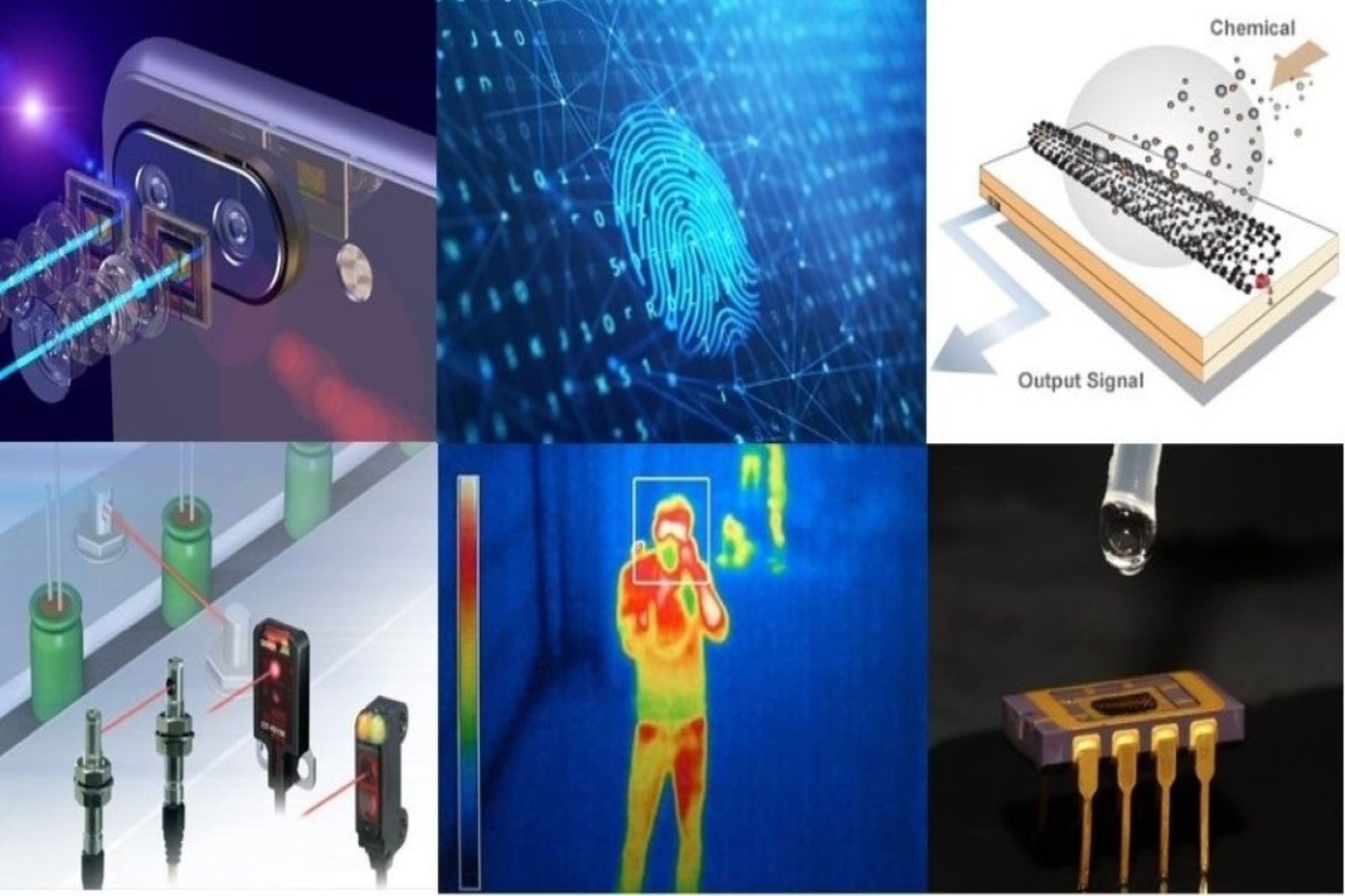
In our modern, data-driven world, we are surrounded by technology that seems to "understand" its environment. Automatic doors open as we approach, smartphones dim their screens in the dark, and thermostats adjust the room temperature without being asked. The magic behind all these actions, and countless others, is a vast and varied family of devices known as sensors.
What is a Sensor?
At its core, a sensor is a device that detects and responds to some type of input from the physical environment. This input, or "stimulus," can be anything from light, heat, and motion to pressure, moisture, or the presence of a chemical.
Think of sensors as the "senses" of a machine or electronic system, just as humans have eyes, ears, nose, tongue, and skin. However, a sensor's job doesn't stop at just detecting the stimulus. Its crucial function is to convert that physical input into a signal that can be understood by other electronics—most commonly, an electrical or digital signal. This signal is then sent to a processor (like a computer or a microcontroller) which can interpret the data and make a decision or perform an action.
How Do They Work?
The fundamental principle of any sensor is transduction—the process of converting one form of energy into another.
For example:
- A microphone is a sensor that detects sound waves (mechanical wave energy) and converts them into an electrical signal that an amplifier can process.
- A thermometer (specifically a digital one) contains a sensor (like a thermistor) that changes its electrical resistance based on the temperature (thermal energy). A computer chip then reads this resistance and translates it into a temperature reading we can understand.
Common Types of Sensors and Their Applications
Sensors are incredibly diverse, with different types designed for specific tasks. Here are some of the most common ones:
- Temperature Sensors: These are perhaps the most familiar. They measure the amount of heat energy in a source.
- Applications: Home thermostats, car engines, refrigerators, medical thermometers, and industrial machinery.
- Proximity Sensors: These detect the presence of a nearby object without any physical contact.
- Applications: The screen on your smartphone turning off when you hold it to your ear, automatic faucets, parking sensors in cars, and assembly line automation.
- Light Sensors (Photoelectric Sensors): These detect the presence and intensity of light.
- Applications: Automatic streetlights that turn on at dusk, smartphone screens that adjust their brightness automatically, and security systems.
- Motion Sensors (PIR & Ultrasonic): These detect physical movement in an area.
- Applications: Automatic lighting in rooms, burglar alarms, and hand-dryers in public restrooms.
- Pressure Sensors: These measure the force applied by a liquid or gas.
- Applications: Tire pressure monitoring systems (TPMS) in cars, blood pressure monitors, and weather stations (to measure atmospheric pressure).
- Accelerometers & Gyroscopes: These sensors measure acceleration (the rate of change of velocity) and orientation or rotational movement.
- Applications: They are key components in smartphones and tablets for rotating the screen, in fitness trackers for counting steps, and in cars for stability control systems.
- Gas & Humidity Sensors: These detect the presence of specific gases or the amount of moisture in the air.
- Applications: Carbon monoxide detectors, air quality monitors, and humidity control in "smart home" HVAC systems.
Why Sensors Are So Important
Sensors are the fundamental building blocks of the Internet of Things (IoT) and all modern automation. They are the bridge between the physical world and the digital world. Without them, our devices would be "blind" and "deaf," unable to gather the real-time data needed to perform tasks.
From making our homes safer and more efficient to enabling complex medical diagnostics, advancing robotics, and monitoring our planet's environment, sensors are the unsung heroes working quietly in the background to make our technology smarter, more responsive, and more useful.
Comments (0)