

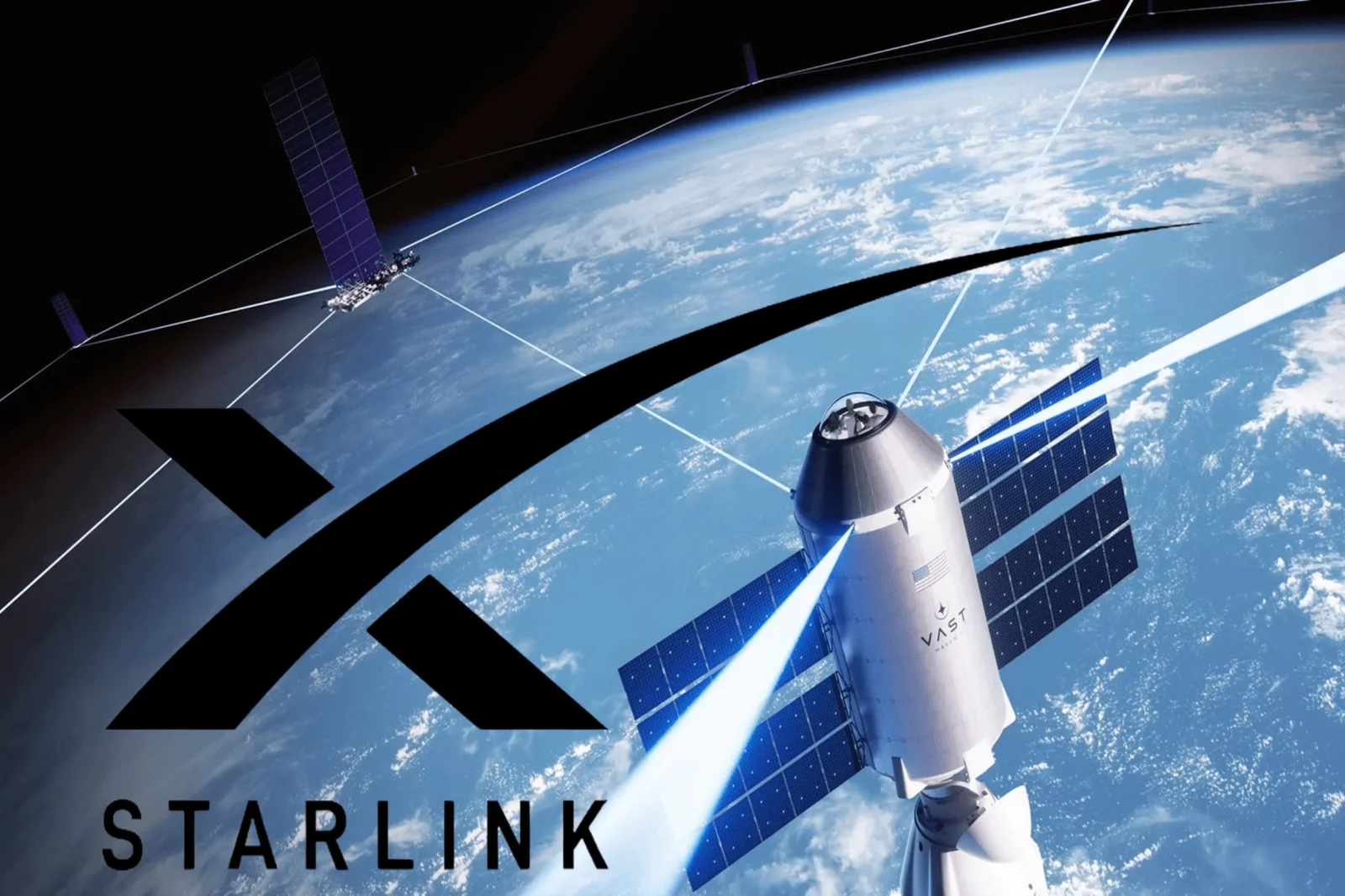
In the past few years, stargazers and astronomers have noticed something new in the night sky: long, perfect "trains" of lights moving in unison. These are not UFOs or a celestial phenomenon; they are the visible manifestation of one of the most ambitious engineering projects ever undertaken—SpaceX's Starlink.
What is Starlink?
Starlink is a satellite constellation project developed by SpaceX, the aerospace company founded by Elon Musk. Its primary goal is ambitious yet simple: to provide high-speed, low-latency broadband internet to virtually every corner of the globe.
The project aims to solve one of the most persistent problems of the digital age: connectivity. While cities and suburbs often enjoy fast, reliable internet, vast rural and remote areas remain "underserved" or completely disconnected. Starlink bypasses the need for expensive and difficult-to-lay ground infrastructure, like fiber optic cables, by beaming internet directly from space.
The LEO Advantage: How It Works
Traditional satellite internet, which has been available for decades, relies on large satellites in geostationary orbit (GEO). These satellites are positioned far from Earth (about 35,000 km) and match the planet's rotation, so they appear fixed in the sky. While effective, this great distance creates a significant problem: high latency, or "lag." The time it takes for a signal to travel to the satellite and back makes activities like video conferencing, online gaming, and other real-time applications difficult.
Starlink's solution is to use a "megaconstellation" of thousands of smaller satellites in Low Earth Orbit (LEO), just a few hundred kilometers above the surface. This proximity dramatically reduces latency, offering speeds and responsiveness comparable to ground-based broadband.
To connect, a user on the ground needs a small, automated satellite dish (the Starlink terminal) that orients itself to find the best signal as the satellites speed overhead. These satellites communicate with a network of ground stations, as well as with each other using inter-satellite laser links, to create a fast, resilient global network.
The Promise: A Connected Planet
The potential benefits of Starlink are immense.
- Bridging the Digital Divide: It can bring modern internet to remote communities, isolated homes, and developing nations, unlocking access to education, telehealth, and economic opportunities.
- Mobility: It provides connectivity for sectors that have always struggled with it, such as aviation, maritime shipping, and RVs.
- Disaster Recovery: When natural disasters like
Comments (0)