

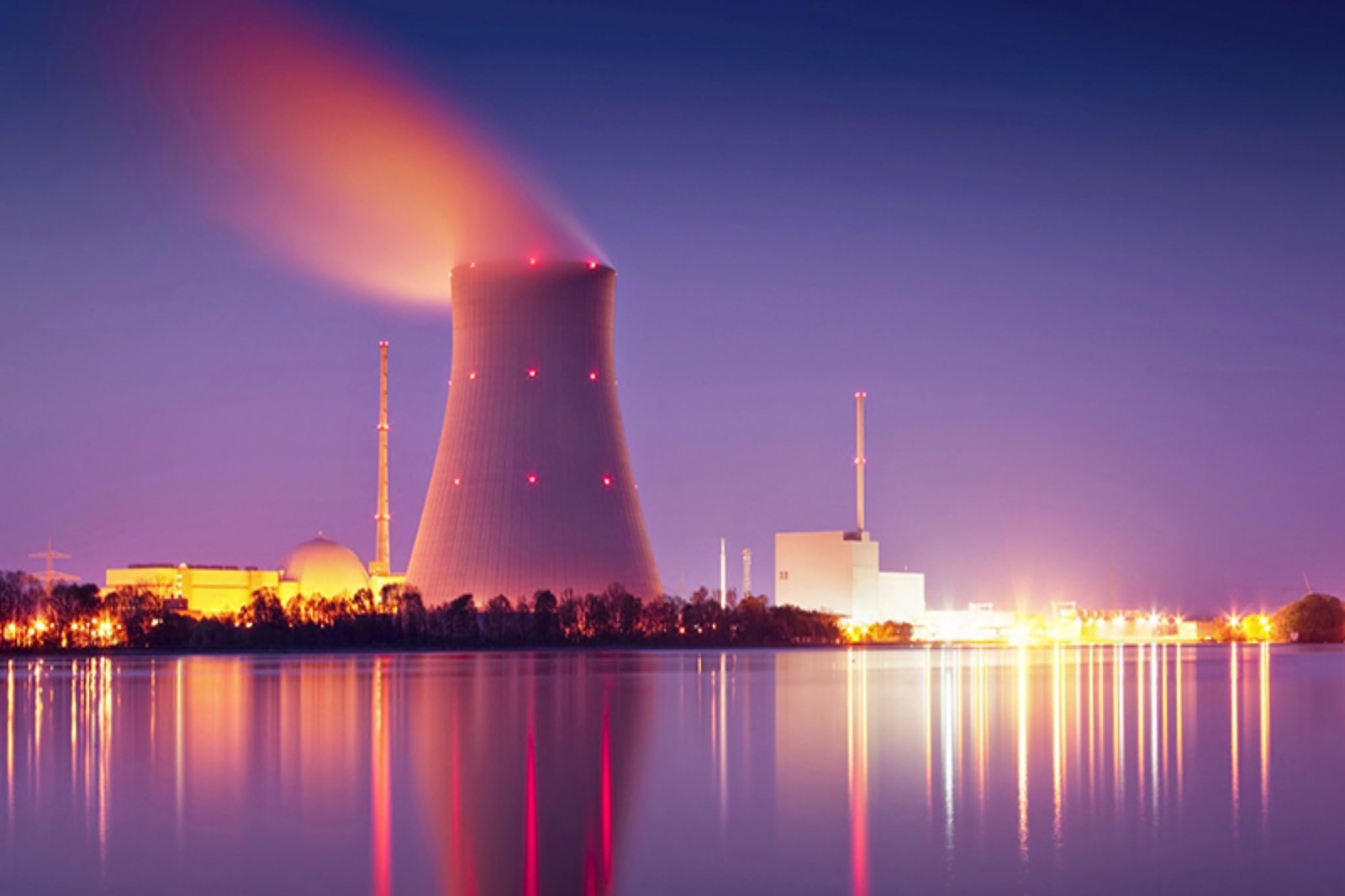
The generative AI revolution, powered by massive Large Language Models (LLMs) and complex neural networks, has an insatiable secret: an astronomical appetite for electricity.
As companies like OpenAI, Google, Microsoft, and Amazon race to build more powerful AI, they are colliding with a fundamental physical barrier. The computational power required for training and running these models is far exceeding the capacity of traditional data center power infrastructure, forcing the industry to seek a solution that was once unthinkable: nuclear power.
Here is a breakdown of why the future of artificial intelligence may be inextricably linked to nuclear fission.
1. The Core Problem: AI's Unprecedented Energy Demand
Traditional data centers, which run cloud services, streaming, and social media, already consume a significant amount of global energy. However, AI workloads are a different beast entirely.
- Training vs. Inference: Training a single large model (like GPT-4) can consume more electricity than 100 U.S. homes would in an entire year.
- Constant Operation: After training, the "inference" phase—the part where the AI answers your prompt or generates an image—runs 24/7. As AI integration becomes universal, the cumulative energy draw is staggering.
A single AI query on a service like ChatGPT is estimated to use 10 to 100 times more electricity than a simple Google search. Scaling this to billions of users creates an energy demand that the current grid simply cannot handle.
2. The Failure of the "Green" Alternatives (For This Specific Need)
Big tech companies have all made massive public commitments to be 100% carbon-neutral, investing billions in solar and wind power. The problem? Solar and wind are intermittent.
- Intermittency: The sun doesn't shine at night, and the wind doesn't always blow. AI training jobs, however, cannot be paused. A training run that takes weeks or months needs a constant, uninterrupted flow of power. An outage could corrupt the entire process, wasting millions of dollars.
- Power Density (Land Use): To generate the same amount of power as a single nuclear plant (often 1-2 Gigawatts), you would need a solar or wind farm covering hundreds of square kilometers. This is often not feasible, especially near the major hubs where data centers are needed.
- The Battery Bottleneck: The logical solution to intermittency is massive-scale battery storage. However, the battery technology required to back up an entire gigawatt-scale data center campus for days or weeks simply does not exist at an economical scale.
3. Why Nuclear is the "Perfect" Solution
Nuclear power solves all three of AI's primary energy challenges:
a) Massive, Scalable Baseload Power A nuclear reactor doesn't rely on the weather. It is the definition of "baseload" power, designed to operate continuously at maximum output (often with 90-95% uptime) for 18-24 months before refueling. This provides the stable, 24/7/365 electricity that massive AI data centers crave.
b) Zero Carbon Emissions This is the critical piece of the puzzle. Nuclear fission produces zero carbon emissions. For tech companies struggling to balance their enormous AI energy needs with their public carbon-neutrality pledges, nuclear power is one of the only solutions that delivers massive power without burning fossil fuels.
c) High Power Density A nuclear power plant has an incredibly small land footprint. This allows a power source to be co-located near or on the same campus as the data center it serves, reducing transmission losses and reliance on a fragile public grid.
The New Frontier: Small Modular Reactors (SMRs)
The industry isn't just looking at building giant, traditional nuclear plants. The real excitement is around Small Modular Reactors (SMRs).
SMRs are a next-generation nuclear technology. They are:
- Small: Producing dozens or hundreds of megawatts instead of gigawatts.
- Modular: Built in a factory and assembled on-site, making them faster and cheaper to build.
- Scalable: A company could start with one SMR and add more modules as its data center's power needs grow.
This "on-site" power generation is the holy grail for big tech. In 2023, Amazon Web Services (AWS) made headlines by acquiring a data center campus in Pennsylvania that is "co-located" with and directly powered by a 2.5-gigawatt nuclear plant. Microsoft has explicitly been hiring nuclear energy experts to lead its strategy for powering its AI infrastructure with SMRs.
Conclusion: An Energy Revolution to Fuel the AI Revolution
The race for AI supremacy is no longer just about algorithms and data; it is fundamentally a race for energy.
Sam Altman, the CEO of OpenAI, has stated repeatedly that the future of AI is "going to require an energy breakthrough." As conventional renewables prove insufficient for the unique baseload demands of AI, the tech industry has concluded that this breakthrough may not be a new technology, but rather the scaling and modernization of an existing one: nuclear power. To build the "brain" of the future, Big Tech is realizing it first needs to build the ultimate power source.
Comments (0)